
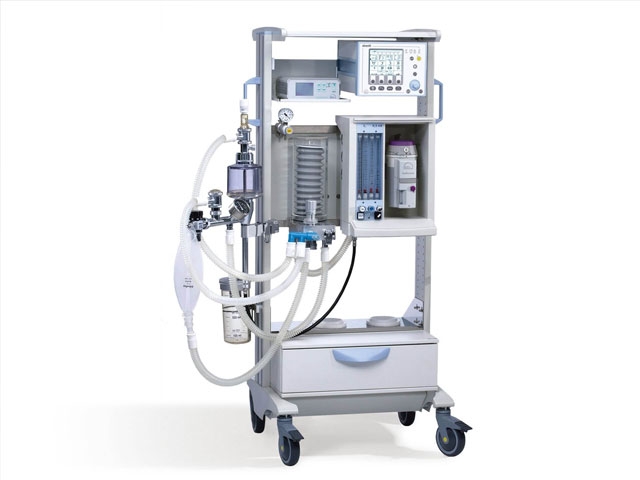
1. Ammonia evaporator or isoflurane evaporator equipped with flow, temperature and pressure compensation.
2. High-precision nitrous oxide, oxygen flow meter and nitrous oxide automatic cut-off device.
3. Electrically controlled fixed volume tympanic anesthesia ventilator for adults and infants. With flow and power alarm functions.
4. Plate low-flow breathing circuit system and ISO standard interface that can save a lot of carrier gas and anesthetic drugs.
5. Equipped with real-time monitoring of the tidal volume, ventilation, respiratory rate and oxygen concentration of the respiratory monitor to ensure the safety of the patient's life.
6. Respiratory monitor uses microcomputer technology, real-time digital waveform display and sound and light alarm to monitor tidal volume, frequency, minute ventilation, airway pressure and inhaled oxygen concentration during the breathing process. Chinese menu display, one-key settings Alarm parameters, easy to operate.
7. Equipped with built-in battery, can work for 2 to 3 hours without electricity
1. Air source pressure: O2: 0.27~0.55Mpa N2O: 0.27~0.55Mpa
2. Air: 0.27~0.55Mpa 2. Flow adjustment range: O2: 0.1~15L/min N2O: 0.05~10L/min
3. Air: 0.2~12L/min 3. O2 ratio limitation (ORC): O2 concentration ≥ 25% (for O2+N2O)
4. Hypoxia alarm: when the O2 pressure ≤0.2MPa, an audible alarm is issued, and the audible alarm time ≥7s, N2O automatically intercepts. When the O2 pressure ≤0.14MPa, the N2O output decreases accordingly. When the O2 pressure ≤0.04MPa, the N2O is completely cut off
5. Rapid oxygen supply: 75L/min

Wechat consulting
Wechat consulting